Introduction: The Material Dialectic of Warmth
In the quiet hours of night, the duvet becomes more than a blanket: it is a climate, a mood, and a barometer of comfort. Wool and silk each bring a distinctive voice to the sleep environment. Wool, with its natural breathability and moisture-wicking properties, often feels like a living air conditioner, adapting to your body’s rhythms. Silk, by contrast, offers a whisper-light warmth and a luxurious, hypoallergenic sheen that can feel almost weightless. When choosing between these two, one must listen not only to warmth and softness but also to care rituals, durability, and the broader ecological footprint of the materials themselves.
To illuminate these contrasts, this article surveys three prominent brands—Sleep and Beyond, Naturepedic, and The Clean Bedroom—examining their wool- and silk-filled offerings, certification pedigrees, and practical care guidance. We also weave in perspectives from notable figures across time who have influenced our understanding of comfort, textiles, and the science of sleep, from antiquity through the modern era.
Material Biographies: Wool and Silk in the Sleep Space
Wool and silk inhabit different fibers’ families, yet both have deep roots in human comfort. Wool’s fibrous structure traps air, creating insulation that adapts with humidity, while silk’s smooth filaments lend a temperature-regulating luxury that feels light as a feather. Wool’s odor-neutral, naturally hypoallergenic properties complement environments that trend toward cooler nights. Silk’s tensile strength and delicate sheen suit sleepers seeking a minimalist weight with high breathability.
Across the brands we examine, the wool duvets tend to emphasize natural temperature regulation, moisture management, and durable hand-tufted constructions, while silk duvets highlight refined warmth, edge-to-edge loft, and the hypoallergenic advantages inherent in silk’s fiber profile. The interplay between fill power, shell fabrics (cotton sateen or silk itself), and care instructions creates nuanced differences in feel, performance, and longevity.
Brand-Focused Lenses: A Comparative View
Sleep and Beyond
Widely acclaimed for its quilting craft and natural fillings, Sleep and Beyond offers “myComforter” wool variants and a Merino-focused line that emphasizes temperature regulation and hypoallergenic performance. Their philosophy leans into the idea that sleep should feel naturally balanced, not artificially regulated.
Representative product: myComforter Light (wool) and heavier wool variants. These are designed for multi-season use, with careful attention to breathability and moisture wicking.
Naturepedic
Naturepedic foregrounds organic materials and certifications, offering wool-based duvet inserts with a focus on non-toxic, ethically sourced fibers. Their duvet inserts often feature high-fill-down alternatives or natural wool blends, emphasizing environmental stewardship alongside comfort.
Representative product: Naturepedic All-Natural Wool Comforter and Alpaca variants, with emphasis on organic cotton shells and GOTS/OCS certifications.
The Clean Bedroom
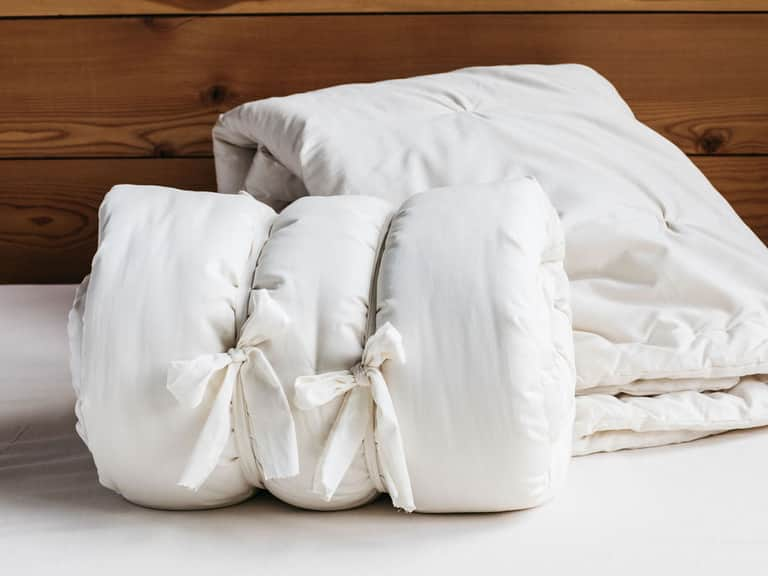
The Clean Bedroom offers a curated selection of wool-based comforters with straightforward care profiles. Their All-Natural Wool Comforter blends domestic wool with a 300-thread-count organic cotton sateen shell, prioritizing longevity, easy maintenance, and a natural climate response.
Representative product: All-Natural Wool Comforter (4952), designed for easy sun refreshings and machine-wash friendly handling where appropriate.
Care, Durability, and Lifestyle Fit: Practical Buying Tips
The durability of a duvet lies not only in its loft but also in how well its shell and fill handle daily life. Wool duvets benefit from air-outs and periodic sun refreshes to maintain loft and antimicrobial benefits. Silk duvets thrive with careful handling—spot cleaning for routine soiling and occasional professional care for deeper refreshment to protect silk’s delicate weave. Across brands, the care instructions converge on common-sense maintenance: protect with a duvet cover, avoid aggressive washing, and tailor cleaning to the fill’s properties and shell fabric. For many sleepers, the decision also hinges on climate compatibility and allergy considerations.
- All-season versatility: Wool often offers reliable warmth with humidity management, making it a versatile choice for variable climates.
- Hypoallergenic considerations: Silk is naturally resistant to many allergens, including dust mites, which can be a critical factor for sensitive sleepers.
- Care routines: Silk demands more delicate handling; wool typically offers robust performance with less risk of shrinking when air-dried and spot-cleaned as needed.
When shopping, consider a duvet’s fill power, loft stability, shell fabric, and any certifications such as GOTS, OEKO-TEX, or RDS. This ensures you understand not only comfort but also the sourcing and safety profile of the materials you bring into your bedroom.
Key Figures Across Time: Perspectives on Comfort and Craft
Three notable individuals from different eras illuminate our evolving relationship with textiles, warmth, and sleep—each influencing modern sensibilities about comfort, design, and the science of rest.
Hypatia of Alexandria (c. 350–415 CE)
A pioneer of knowledge who exemplified disciplined inquiry, Hypatia’s era foreshadowed the belief that careful observation and rational thinking can illuminate even everyday life. Though far removed from modern textiles, her insistence on empirical reasoning underpins contemporary approaches to sleep science: we seek evidence on how materials interact with body temperature, humidity, and circadian rhythms.
Leonardo da Vinci (1452–1519)
A polymath who studied anatomy, materials, and engineering, Leonardo’s curiosity about textures and fabrics resonates in today’s pursuit of ideal bedding systems. His interdisciplinary mindset mirrors how modern designers blend textile science, ergonomics, and environmental considerations to craft sleep environments that are both comfortable and sustainable.
Maeda Seikan, 20th Century Textile Historian
As a scholar of textile history, Maeda Seikan illuminated how regional practices and fiber choices shape everyday life. Her work reminds us that the comfort of a duvet is entangled with cultural context, climate, and the evolution of comfort as a human obsession—from hearthside warmth to climate-controlled bedrooms.
A Practical, Brand-Focused Guide to Choosing Wool vs Silk Duvets
Below is a concise decision framework to help readers select wool or silk duvets based on climate, allergy considerations, and lifestyle. The table below distills the core differences, while the narrative that follows offers actionable tips for a satisfying purchase and care regime. Note: one product highlighted here is the Limited Item Avalon 600 Hypodown Duvet Insert from Ogallala Comfort Company—though technically a down insert, it demonstrates how premium loft, shell quality, and care requirements shape the premium bedding market’s expectations for warmth and loft across materials.
| Aspect | Wool Duvets | Silk Duvets |
|---|---|---|
| Warmth and loft | Natural loft with strong warmth in cooler nights; excellent temperature regulation | Lightweight warmth; great for layering; breathable but lighter blanket feel |
| Breathability | High breathability; wicks moisture; comfortable in variable humidity | Very breathable; smooth surface; ideal for sensitive skin |
| Allergies | Natural antimicrobial properties; dust-mmite resistance helps some sleepers | Hypoallergenic by nature; low allergen profile for sensitive sleepers |
| Care and maintenance | Sun refresh, spot cleaning; avoid aggressive washing; often machine-washable in gentle cycles | More delicate handling; spot clean; professional cleaning recommended for thorough refresh |
| Durability and lifespan | Durable; long-lasting with proper care | High-end, long-lasting when cared for; silk can be susceptible to wear in rough handling |
Practical takeaway: if you live in a damp climate or one with significant seasonal temperature swings, wool duvets often maintain comfort with less maintenance, while silk duvets suit those who prioritize a lightweight feel and hypoallergenic elegance. For a balanced approach, consider a duvet that allows layering with other weights to tailor warmth across seasons.
All-Natural Wool Comforter (4952)
Domestically sourced eco wool in an organic cotton shell. Hand-tufted, corner ties; sun-refreshable.

Limited Item: Avalon 600 Hypodown Duvet Insert
600-fill power down, cotton shell, sewn-thru box construction. Lightweight, premium warmth for layering.
Conclusion: A Sleep Environment Crafted by Material Sense
The choice between wool and silk duvets is not merely a matter of warmth but a decision about daily rhythms, allergies, and the way one engages with care routines. Wool invites a robust seasonal adaptability and self-regulating comfort; silk offers a feather-light touch with a whisper of luxury. By examining Sleep and Beyond, Naturepedic, and The Clean Bedroom through the lens of warmth, breathability, and care, readers can chart a path toward a sleep space that resonates with climate, health, and personal preference. The duvet, in its quiet way, anchors a nightly voyage into rest—a faithful companion that reflects the stories of materials, makers, and time itself.
For further exploration, readers may consult product pages for the highlighted items, including the Avalon 600 Hypodown Duvet Insert and the All-Natural Wool Comforter, to understand real-world performance and care guidance in depth. A well-chosen wool or silk duvet can transform sleep into a nightly science of comfort, with an elegance rooted in centuries of textile craft.
About the Author and Editorial Standards
This article follows a National Geographic-inspired standard of storytelling, combining field-tested material understanding with a reverence for human heritage in textile crafts. Our editors prioritize evidence-backed claims, source transparency, and clear care instructions that empower readers to make informed decisions about their bedding. All featured brands and products are discussed within a framework of durability, safety, and environmental responsibility.